Wednesday, 6 February 2013

Hopeful.....

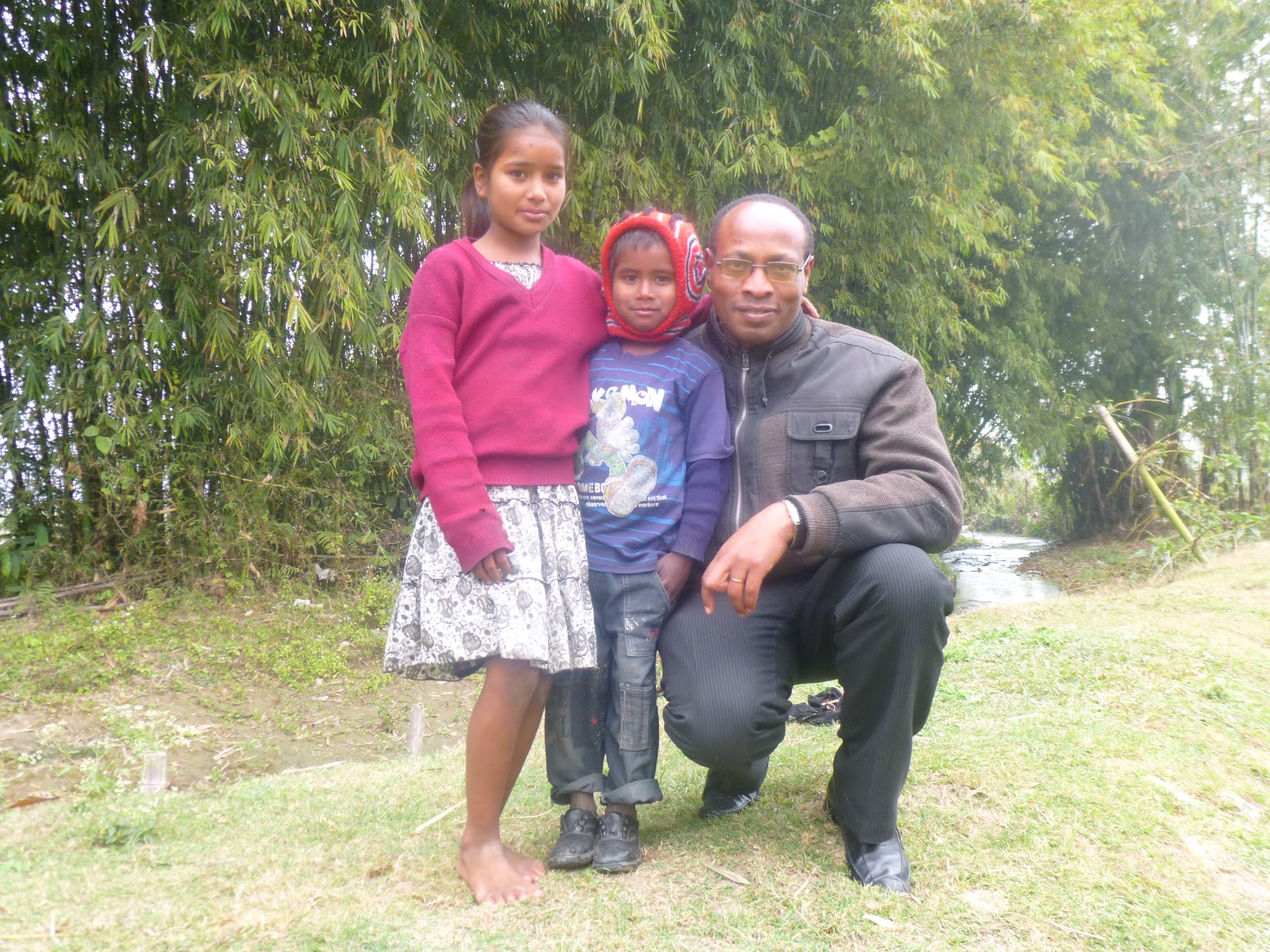
Children who courageously live positively

The estimated 13,000-plus children in Nepal who are already living with and affected by HIV. But to be an HIV-positive child is not nearly as dire as it once was. As we have been seeing with adults infected with the virus, controlling HIV in young patients has dramatically improved in recent years. Approximately a decade ago, a pediatric HIV diagnosis was associated with a dismal prognosis: most infected children would die before their fifth birthday. Today, thanks to early access to care and advances in HIV drug treatment, approximately half of all HIV-infected children will live to enter and graduate from school. And with more information quickly emerging with respect to how HIV-infected children should be treated, we can expect the success rate to improve significantly.

Caring for a child who is HIV positive comes with many challenges. We sincerely hope that the learnings will enable the health workers and communities better understand children and HIV, but also to enhance communication with pediatric health care providers.

Strengthening family's livelihood base would also reduce the impact of the epidemic. Children support for nutritious food, education ,access to treatment, emotional support and helping communities to care for sick and vulnerable children remain a priority.

Pray for children living positively during this winter season as we envision a world where children and families can live free of HIV infection and in which families that are affected by HIV and AIDS can live positively and productively without stigma and discrimination

Tuesday, 11 December 2012

Celebrating International Day of Persons with Disabilities in Nepal


It was a day well spent charting with Representatives from organizations working with people with special abilities. The event was happened in Kathmandu at World Trade Center. There was Career Expo for Persons with Disabilities. The discussions were about removing barrier to create an inclusive and accessible society for all. I saw different people with special abilities the blind, deaf and disabled and my heart was moved. The celebration was attended by Government officials, INGOS, lateral and bilateral agencies, NGOS and companies.
It was revealed that 2% of the total population in Nepal is reported to have some kind of disability. There are about 500,000 people with disabilities in Nepal and Still 90% of the them live below poverty line. The technical barrier hinders or keeps persons with disabilities from equal, active and effective participation. The barriers hinder access to employment, health and education. The good news was that Nepal is transforming and therefore the society begins to understand the issues surrounding people with disabilities. The Career Expo for Persons with Disabilities is an event that will promote employment opportunities for persons with disabilities in order to make them self dependent, productive and dignified citizens of Nepal.

Tuesday, 27 November 2012

Tihar Festivals in Nepal

Tihar Festivals in Nepal
The Nepalis celebrates Tihar that is the festival of lights which is one of the most dazzling of all Hindu festivals. In this festival they worship goddess Laxmi, the goddess of wealth. During the festival all the houses in the city and villages are decorated with lit oil lamps. Thus during the night the entire village or city looks like a sparkling diamond. This festival is celebrated in five days starting from the thirteenth day of the waning moon in October. In other words this festival is meant for life and prosperity.

Goddess Laxmi is the wife of almighty Lord Vishnu. She was formed from the ocean and she has all the wealth of the seas. She sits on a full-grown lotus and her steed is the owl. On the third day of the festival at the stroke of midnight she makes a world tour on her owl looking how she is worshipped.
There is a story, which tells why this revelry is celebrated so widely. Once there was a king who was living his last days of life. His astrologer had told him that a serpent would come and take his life away. The king did not want to die so he had asked the astrologer if there was any way to escape death. The king was advised to sleep with lit oil lamps all around his bed and decorate the palace with oil lamps on laxmi puja day. So goddess laxmi would talk to the serpent not to take his life. It did happen, the serpent was convinced by goddess laxmi. The serpent took the king to Yama Raj and told him that it was not yet the king's time to come to the underworld. So Yama Raj opened his ledger and in it the kings remaining age was written zero, but the serpent cleverly put seven before zero. Thus the king lived for seventy more years. So onwards tihar is widely celebrated worshipping the underworld and goddess laxmi.

The first day of tihar is known as 'Kag tihar', crows day. Crow is an underworld henchman. On this day crows are offered food on a plate made out of leaves in the morning before anyone in the house takes in food. In the kingdom of Nepal crow is not killed cause as a legend says that one crow had happened to drink the water of life. Thus you can see crows everywhere sitting without the fear of human beings. Crow the messenger of death is honored on the first day of tihar.

The second day is called 'Kukur tihar', dogs day. A dog plays many roles in Nepali society. The dogs are guardian of the house. As the legend also says that there is a dog at yama's gate guarding the gate to the underworld. The dog is also the steed of the fearful Bhairab, the god of destruction. So on this day a big red tika is put on a dog's forehead and a beautiful garland around the neck. After worshipping the dog, it is given a very delicious meal. This day the saying 'every dog has his day' comes true; for even a stray dog is looked upon with respect. People pray to the dog to guard their house as he guards the gate of the underworld and to divert destruction away from peoples homes. On this day you can see dogs running around with garlands on their neck.

The third day is the most important day of the festival. It is called 'Laxmi puja', The day when goddess of wealth is worshipped. On this day, early in the morning the cow is worshipped. Tika is put on her head and a garland around her neck then she feasts with delicious food. A cow also symbolizes wealth and she is the most holy animal for Hindus. The cow is also revered and worshipped as the representation of Laxmi, the goddess of wealth and prosperity, by applying oil on its hoofs and horns and putting red and yellow marks on its body. Hindus consider not only cow's milk and milk-products, but also cow's urine and dung pious. Cow is the national animal of Nepal.

In the evening goddess laxmi is worshipped. Days before the house are cleansed and decorated. For goddess likes clean and tidy places. In the evening a small potion of the house out side the main door is painted red with red mud and an oil lamp is lit on it. A pathway is made from here to the place where the old money box and valuables are kept in the house that is the puja room. All the Nepalese have a box where from generation to generation money is put every year worshipping goddess laxmi. This money is never used unless extreme emergency. The entire house is decorated with lit oil lamps in every doors and windows. Laxmi, goddess of wealth is worshipped performing the traditional rituals and when the rituals are over then gambling in the house starts. This is a festival when gambling is not illegal. On this day throughout the evening groups of girls come to houses singing song of praise of the goddess and they are taken as guests and given gifts. This day the entire place is lively through out the night.

The fourth day is bit different. Today the things worshipped depend on specific cultural background. Normally most of the people perform 'Guru puja', ox worshipping. The ox is worshipped with tika, garland and then a delicious meal is fed to it. On the other hand people who follow lord Krishna perform 'Gobhardan puja'. These people build a small hill made out of cowdung and put some grass on it then do puja on it. This puja symbolises the act of lord Krishna when he lifted the gobhardan hill and saved millions of people and cows from floodwater.

If you belong to the Newar community, you perform 'Mha puja' which literally means worshipping yourself. The newar community people are worshipping life by doing puja on themselves. On this very day the newar New Year also starts. Nepal has many minor community calendars and newar calendar is one of them but the nation follows the Bikram Sambat calendar.

The last day of tihar is 'Bhai tika', putting tika on your brothers by your sisters. The royal astrologer gives the appropriate time to put the tika through the national radio a day before and the entire nation abides by it. Even his majesty receives tika from is sisters. When his majesty receives tika a thirty-one-gun salute is given to honour the function. At this moment the entire nation will be observing bhai tika. The main theme behind bhai tika is the sisters praying for their brother's long life from Yama Raj, god of the underworld.

The most exotic and dazzling festival comes to an end after these five magnificent days of worship and honor to the goddess laxmi and the underworld kingdom.

Pray for Christians in Nepal as they reach people during this celebration in Villages and Urban areas

Thursday, 27 September 2012

Encouraging and fulfilling moments in Scotland…

The journey from Edinburgh to Kilmarnock and Inverness by train was enjoyable – seeing dramatic hills, green vegetation, flowing springs and amazing landscapes. I enjoyed meeting Church of Scotland congregations at Crosshouse, John Knox, St Andrews St.Columbus, St Kentigern’s, Fullarton, Ness Bank, Petty, Ardersier, Kirkhill, Crown, Barn, Drumnadrochit and Tomatin Breakfast Club. It was encouraging to share the progress of the Mission work including HIV and AIDS in Nepal.

My visit to schools and other community projects were encouraging and I enjoyed Alistair McDonald’s concert in John Knox Church, meeting with local voluntary groups’ representatives, talks with children in Schools and a football match between Scotland and Serbia (0-0).

I visited Blythswood Care at Evanton, spoke to staff and was impressed to learn how the organization mobilizes local resources to support physically and spiritually the needy people in Scotland and developing countries.

There was a Sexual Health Update day at Council Chambers Glenurquhart Road that was attended by Health Professionals and I had opportunity to share about the work supported by Church of Scotland in Nepal. According to the statistical data provided during the conference, UK has about 91,500 people living with HIV and AIDS.

I thank Ness Bank Guild, World Mission Council, Parish Ministers and the members of the church who provided accommodation, refreshments and vehicular facilitation.

It was exciting sailing to Loch Ness, a home of the ‘monster!’

Deputation was a wonderful experience for me! It was a time of great growth in my life. I thank God for the congregations’ prayers and support. Also, we want to thank the many faithful churches who have partnered with us so that we may move on to the next step of our ministry ensuring fullness of life in a transformed Nepali society.


Thank you and we wish you every blessing. 


By Joel, Agnes, Grace and Francis

Thursday, 7 June 2012

Empowering churches for HIV response


Participants of HIV and Church’s response workshop


The process of enabling or empowering churches to serve requires commitment and willingness to bring about change. The Church should arise, communicate and serve people in need.
The HIV and AIDS orientation was conducted in Anugrah AG Church in Kabilvastu District. There were 24 Church leaders and members from 9 churches. In Nepal HIV awareness among the Christian community in Nepal is still low. The issue isn’t talked about much and congregations need to learn how to mainstream prayers for those infected and affected. It was encouraging to see participants deliberate on the various roles and capacity areas that are needed for churches to respond.

The HIV orientation sessions became a modeling opportunity to learn about facilitation skills and how to tackle sensitive matters like the use of condoms, sexually transmitted infections and sexual reproductive health.

Skill building, providing accurate information and emphasis on biblical perspective motivated Christian leaders and members to understand how HIV and AIDS issues can be addressed in the Christian community with their own resources.

The churches will be using the self assessment tool every six months to ascertain their progress and facilitators will attend peer learning reviews to share experiences and learn from each other. The initial score on the self assessment will be recorded by individual churches and then every 6 months the new score would be calculated. The progress will also be documented.

Relationship building enhances unity among churches and communities to respond to HIV and AIDS.

Please pray for: Political situation in Nepal especially for leaders as they make decisions that affect people and the country


Friday, 11 May 2012

A challenging trip to Harbale

Church leaders on the way to Harbale Nawaparasi
It was a challenging experience going to Harbale to conduct HIV sensitization. This is a remote area with narrow roads, constructed along steep cliff 200 meters deep in most of the areas. We spent the whole day going round and round the hills. I was encouraged to see people enthusiastic to know more about the epidemic. This is a marginalized area and services are very limited.

Christian leaders are challenged to create a good environment for members to learn, pray and encourage each other. The leaders realized that empowering church members on different social issues including HIV could be good entry points into serving the community. The church leaders also recognize that Biblical reference was important to ensure that ignorance is replaced with knowledge, and indifference with compassion.

Although HIV and AIDS is a global issue some participants were not aware about HIV, its mode of transmission and Christian responses towards community and marginalized people.
Please pray for childrens education in Harbale.

Wednesday, 4 April 2012

My reflection on HIV and AIDS orientation in Kalimpong, India

I take this opportunity to express my sincere gratitude to Church of Scotland and DISHA project staff for my visit to Kalimpong to facilitate awareness module on HIV and AIDS for Eastern Himalayan Diocese, Church of Northern India. The arrangement was done through DISHA-SAHAIYATA project supported by Church of Scotland. There were 43 participants from various pastorate regions. The orientation was successful and much was highlighted in 3 local television channels and local newspapers.

Group discussions on Biblical perspective
 on HIV and AIDS
The church members were encouraged to respond on HIV. In one area in Kalimpong, 116 people are living with HIV and Kalimpong Sub-Division Hospital provides treatment, care and support. Drug use is the main mode of HIV transmission among others. It is my hope that churches will work with communities to ensure that those infected and affected will have access to life skills, livelihood, enhance their resilience in this era of HIV and AIDS and give hope to affected population.


Kalimpong is one of the largest Sub-Divisions of India and has the distinct advantage of being centrally located and would require a minimum stay of 3 to 4 days to be covered. I enjoyed visiting Kalimpong and Darjeeling. Except for the monsoon months of Mid July to Mid September, Kalimpong is a wonderful place to visit throughout. The main languages are English, Nepali, Hindi and Tibetan. People migrate to other states in India and to neighboring countries such as Bhutan, China and Bagladesh.


Access to treatment enhances positive living

Please pray for:
• Church engagement in HIV work in Kalimpong

• People living with HIV and AIDS and caregivers

• DISHA project and the Sub Division hospital staff in Kalimpong as they encourage communities to respond to HIV and AIDS

• Government line agencies and other stakeholders supporting communities.